

Freezing a Debtor’s Assets Before Judgment: A Practical Look at Prejudgment Attachment in California
Key Takeaways: A California writ of attachment is a prejudgment remedy that can place a lien on a defendant’s property while litigation is pending, potentially giving an unsecured commercial claimant a secured position before judgment. It is generally limited under CCP § 483.010 to claims for money, in a fixed or readily ascertainable amount of at least $500, based on a contract, and, where the defendant is a natural person, only where the claim arises from that person’s trade, business, or profession. Obtaining one generally requires a noticed hearing under CCP §§ 484.040 and 484.050, where the court considers only whether the claim is "probably valid," not whether it is actually valid. At that hearing the court must make each finding listed in CCP § 484.090(a), including that the attachment is not sought for an improper purpose; parallel findings for ex parte issuance appear in CCP § 485.220(a). Before the writ issues, the plaintiff must post an undertaking with a $10,000 statutory baseline that the court may increase under CCP §§ 489.210 and 489.220. Defendants can oppose on probable validity, the amount claimed, or exemptions, so the strength of the documentary record may significantly influence whether attachment helps secure a claim.
When a customer, supplier, or tenant stops paying, the biggest risk is often not losing the lawsuit, it’s winning and finding nothing left to collect. A California writ of attachment is a court-ordered prejudgment remedy that may allow a plaintiff in certain commercial cases to place a lien on a defendant’s property while litigation is pending, potentially preserving assets that might otherwise disappear before judgment. California’s Attachment Law, codified at CCP § 481.010 et seq., permits this tool only when a plaintiff satisfies demanding statutory and procedural requirements.
If your business is weighing whether attachment makes sense in a pending or contemplated dispute, timing matters. The team at Lurie & Associates helps California businesses evaluate whether a claim qualifies for this remedy and what it would take to obtain one. Call (310) 478-7788 or schedule a consultation today to discuss your situation.
What Attachment Actually Does for a Creditor
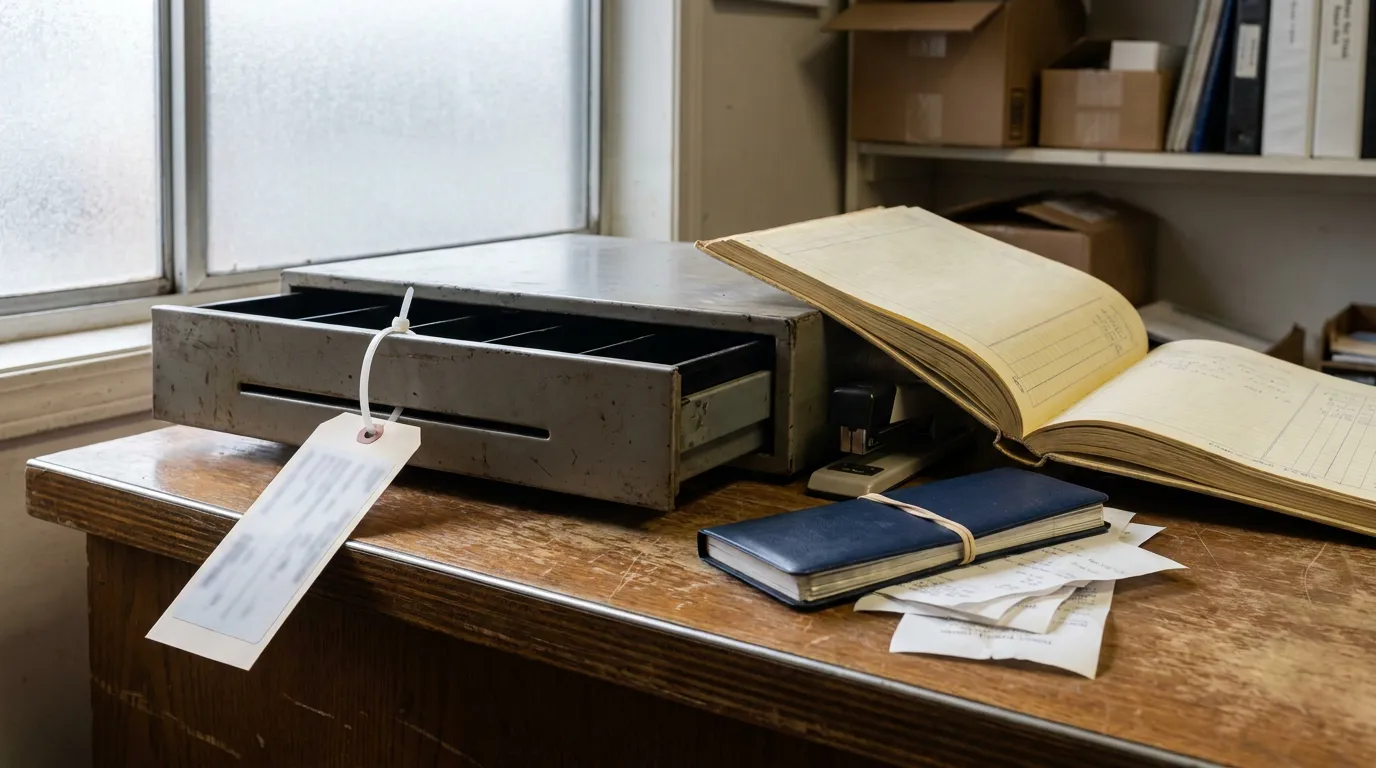
Attachment can give an unsecured commercial claimant a secured position before any judgment is entered. Once a writ issues and the levying officer levies on the property, the plaintiff generally holds a lien on the identified property, meaning a later sale, transfer, or encumbrance takes subject to it. That can change the negotiating dynamic, since a defendant whose receivables or inventory are encumbered may have strong incentive to resolve the matter. The lien is provisional, however: it generally lasts only while the action is pending and terminates if the action is dismissed, judgment is entered for the defendant, or the defendant posts a release bond.
Attachment is not available in every dispute. It’s generally limited to claims for money, in a fixed or readily ascertainable amount, based on an express or implied contract, where the claim is unsecured or secured only by personal property. When the defendant is a natural person, the claim must also arise from that person’s trade, business, or profession. Under CCP 483.010, the claim must meet these threshold conditions before a court will even consider the application.
Why Asset Security Matters in Business Debt Collection
A judgment is generally only as valuable as the assets available to satisfy it. Many defendants have liquid assets at the outset of a case that are gone eighteen months later, whether through ordinary operations, payments to insiders, or deliberate transfers. Securing a claim early can mean the difference between meaningful recovery and a paper judgment.
💡 Pro Tip: Before filing, gather everything showing the amount owed is calculable from the contract itself. Invoices, purchase orders, account statements, and written acknowledgments of the balance generally strengthen an application far more than narrative declarations do.
How a California Writ of Attachment Is Obtained
The standard route generally requires a noticed hearing, not a surprise filing. Under CA § 484.050(a), the defendant must receive notice that a hearing will be held on plaintiff’s application for a right to attach order and writ of attachment. The application’s contents are governed by CCP § 484.020, and supporting affidavit requirements by CCP § 484.030. Ex parte issuance is possible under CCP § 485.010 only on a showing of great or irreparable injury, such as a threat that property will be concealed, transferred, or dissipated.
The notice must also explain the limited nature of the hearing. CA § 484.050(b) requires the notice to state that the order "will be issued if the court finds that the plaintiff’s claim is probably valid," and that the hearing "is not for the purpose of determining whether the claim is actually valid." Many business owners misunderstand this: prevailing at the attachment stage does not resolve the merits, and losing does not end the case. A claim is "probably valid" under CCP § 481.190 when it is more likely than not that the plaintiff will obtain a judgment on it.
The Six Findings a Court Must Make
CCP § 484.090(a) sets out the checklist a court applies before issuing a right to attach order after a noticed hearing, and CCP § 485.220(a) sets out the parallel findings for ex parte issuance. The required findings are that the claim is one upon which attachment may be issued; that the plaintiff has established probable validity; that attachment is not sought for a purpose other than recovery on the claim; and that the amount to be secured is greater than zero. An ex parte application requires the additional showing of great or irreparable injury under CCP § 485.010.
Applications tend to fail on one of these points:
- The claim sounds in tort or fraud damages rather than a fixed contractual sum
- The amount owed cannot be calculated without extrinsic proof or expert valuation
- Supporting declarations lack personal knowledge or authenticated business records
- The application appears aimed at pressuring the defendant rather than securing recovery
Calculating the Amount to Be Secured
The secured amount is not simply whatever the plaintiff claims. Under CA § 484.050(c), the amount is determined pursuant to CCP §§ 482.110, 483.010, 483.015, and 483.020, which must be summarized in the notice. Those sections address what may be included (such as allowable costs and attorney’s fees where a contract provides for them), what must be deducted, and how indemnity or security already held affects the calculation. Courts may reduce the requested figure, and an inflated demand can undermine credibility on the probable validity showing.
The Undertaking Requirement and Its Cost Implications
California requires the plaintiff to post an undertaking before any writ issues. CCP § 489.210 requires the plaintiff to file an undertaking to pay the defendant any amount recoverable for wrongful attachment. CCP § 484.090(b) ties the two together for noticed applications, directing that the writ issue upon the filing of an undertaking under §§ 489.210 and 489.220; CCP § 485.220(a) does the same for ex parte issuance.
The statutory baseline amount is set by statute, but it is not a ceiling. Under CCP § 489.220(a)-(b), unless the court orders otherwise, the undertaking amount is $10,000, and if the court determines the probable recovery for wrongful attachment exceeds that, it must order the undertaking increased. A defendant who persuades the court that attaching operating accounts could cause substantial business losses may succeed in raising that figure considerably, a real risk factor to weigh before filing. Under California CCP § 490.020(b), liability for wrongful attachment is limited by the amount of the undertaking, making the bond a cap on statutory wrongful attachment exposure. However, the court may increase the undertaking above the $10,000 baseline under CCP § 489.220(b) if the probable recovery for wrongful attachment would exceed that amount. Businesses evaluating that tradeoff often benefit from working with a California writ of attachment lawyer who has handled the process from application through levy.
| Stage | Key Authority | Practical Consideration |
|---|---|---|
| Eligibility screening | CCP § 483.010 | Contract claim, fixed or readily ascertainable sum of $500 or more |
| Notice of hearing | CCP § 484.050 | Must summarize amount-calculation statutes |
| Court findings | CCP § 484.090(a) (noticed); § 485.220(a) (ex parte) | Probable validity, proper purpose, amount over zero |
| Bond | CCP §§ 489.210, 489.220 | $10,000 baseline, subject to increase |
| Post-issuance notices | Judicial Council forms | Service and documentation obligations |
What the Defendant Can Do in Response
Defendants have a short window to oppose, and many use it. Under CA § 484.050(e), the defendant must file and serve a notice of opposition and supporting affidavit no later than five court days before the hearing. That compressed timeline can cut both ways: it may limit the defendant’s preparation, but the plaintiff should still be prepared for a substantive challenge on probable validity, the amount claimed, or an asserted exemption. Where a writ issued ex parte, the defendant may instead apply under CCP § 485.240 to have the order vacated.
Exemption claims are common when the defendant is an individual. Certain property is exempt from attachment under CCP § 487.020, including property exempt from enforcement of a money judgment and, for a natural person, property necessary for support. The defendant generally bears the burden of claiming and supporting an exemption, and exemption claims are generally waived if not timely asserted. Business entities are subject to a different rule: attachment may reach all corporate or partnership property for which a method of levy is provided. Outcomes vary considerably depending on the record presented.
Documenting the Attachment After Issuance
Obtaining the order is only part of the process. The Judicial Council of California maintains standardized forms for the attachment process, including form AT-165 (Notice of Attachment), used to provide required notice related to attaching a debtor’s property. Using the correct form and serving it properly matters, because defects in the levy or post-issuance notice may expose the attaching party to challenges or a wrongful attachment claim.
💡 Pro Tip: Identify the specific property you want attached before the hearing, not after. Vague applications referencing "all assets" generally invite reduction or denial, while applications identifying particular accounts, receivables, or equipment tend to be easier for a court to evaluate.
Weighing Attachment Against Other Litigation Tactics
Attachment is one option among several, and it is not the right fit for every dispute. Some commercial matters resolve faster through a demand and negotiated payment plan. Others belong in arbitration under a contractual clause, where provisional relief such as attachment may still be sought from the courts under CCP § 1281.8, though the procedural path differs. Our commercial litigation insights cover several of these alternatives in more detail.
The core tradeoff is leverage versus exposure. A well-supported attachment may help secure a claim and accelerate resolution. A poorly supported one may result in denial, an increased bond, or liability for wrongful attachment. The analysis depends heavily on the strength of the documentary record and the defendant’s financial profile, and reasonable practitioners may assess the same facts differently.
Frequently Asked Questions
1. Does a writ of attachment mean I have won my case?
No. Under CA § 484.050(b), the hearing determines only whether the claim is "probably valid," and the statute expressly states the hearing "is not for the purpose of determining whether the claim is actually valid." The merits are decided later, and the court’s attachment findings are generally not binding on the ultimate determination of the claim.
2. How much is the bond to obtain a writ of attachment?
CCP § 489.220(a) sets the standard undertaking at $10,000 unless the court orders a different amount. Subdivision (b) allows the court to increase that amount if it finds the probable recovery for wrongful attachment would exceed it, so the final figure depends on the court’s assessment.
3. Can I attach property in a fraud case?
Generally, attachment under CCP § 483.010 applies to claims for money based on an express or implied contract where the amount is fixed or readily ascertainable. Fraud and other tort claims seeking unliquidated damages typically fall outside that scope, though a case may include both contract and tort theories, and the attachment may be based on the qualifying contract claim. The analysis is fact-dependent.
4. How much notice does the defendant get?
The defendant receives notice of the hearing date under CA § 484.050(a), and under CA § 484.050(e) must file any opposition no later than five court days before the hearing. CCP § 484.040 requires that the application and supporting papers be served at least 16 court days before the hearing, subject to extensions for manner of service. Courts may shorten time or adjust schedules in certain circumstances.
5. What happens if the attachment turns out to be wrongful?
CCP § 489.210 requires the undertaking precisely so the defendant may recover amounts attributable to a wrongful attachment, and CCP § 490.010 defines when an attachment is wrongful. Under CCP § 490.020(b), liability for wrongful attachment is limited by the amount of the undertaking. This is why the eligibility and documentation analysis should occur before filing rather than after.
Bringing It Together
A California writ of attachment can be a decisive tool in business debt collection, potentially giving an unsecured contract claimant a secured position backed by a lien while the case proceeds. The statutory framework is precise: the claim must qualify under CCP § 483.010, the notice must comply with CCP § 484.050, the court must make each finding required by CCP § 484.090(a) (or § 485.220(a) on an ex parte application), and the plaintiff must post an undertaking under CCP §§ 489.210 and 489.220. Creditor rights in this area reward preparation, and every application rises or falls on the specific facts and documents behind it.
If you are evaluating whether attachment could secure your claim, a focused review of your contract and payment records is the place to start. Lurie & Associates works with California business owners, landlords, and purchasers on commercial disputes across Los Angeles and Irvine. Call (310) 478-7788 or reach out to our team to discuss the options available in your matter.
Disclaimer: This content is for informational purposes only and is not legal advice. Every case is unique, and results may vary. Consult an attorney about your specific circumstances.