

The Clock on a Broken Business Deal Starts Sooner Than Most Owners Think
Key Takeaways: In California, you generally have four years to sue for breach of a written contract under CCP § 337 and two years for an oral or implied contract under CCP § 339. Both periods usually run from the date of the breach, not the date you found out about it. Contracts for the sale of goods follow a separate four-year rule under Cal. Com. Code § 2725. Related fraud claims generally have three years from discovery. Before suing a public entity, you usually must file a written government claim, generally within one year for contract claims. Whether a deal counts as "written" can be disputed and can cut your time in half. Talks and informal promises do not stop the clock, though a written tolling agreement may help in limited cases. Record the breach date early, keep your documents, and have a lawyer review the dispute before the deadline costs you the claim.
In California, you generally have four years to sue for breach of a written contract and two years to sue for breach of an oral contract. Both periods usually start on the date of the breach, not when you first notice the problem or when talks break down. That is the short answer to the breach of contract California statute of limitations question. The details matter, though. How the agreement was formed, what it covers, who the other party is, and what the contract says about deadlines can all change the timeline.
If a vendor, supplier, business partner, or other party has failed to perform, check your deadline now, not after another round of promises. Lurie & Associates helps California business owners review contract disputes and work out their options before key deadlines pass. Call (310) 478-7788 or schedule a consultation to have your dispute evaluated.
The Core Deadlines Under CCP 337 and CCP 339
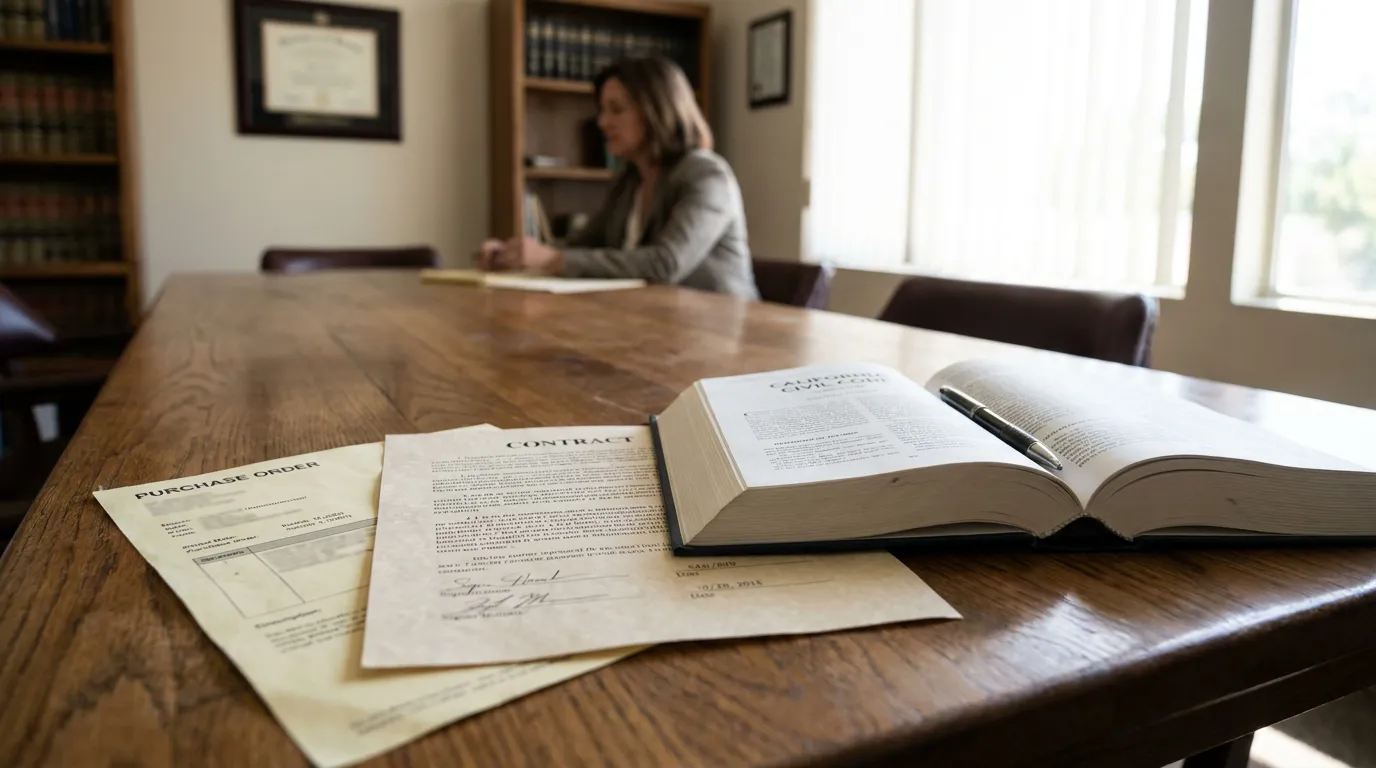
California’s main contract deadlines come from two sections of the Code of Civil Procedure. Under Cal. Code Civ. Proc. § 337, you must generally file an action on a contract, obligation, or liability "founded upon an instrument in writing" within four years. Under Cal. Code Civ. Proc. § 339, you generally must file a claim not founded on a writing within two years.
Written Contracts: Generally Four Years
For most signed business agreements, CCP 337 sets the deadline. That generally includes supply agreements, service contracts, partnership agreements, and promissory notes. Actions on book accounts also generally have four years, and under CCP § 344 the period for an open book account runs from the date of the last item entered. The parties can sometimes agree in the contract to a shorter, reasonable period.
Oral and Implied Contracts: Generally Two Years
Handshake deals and agreements implied from the parties’ conduct have a shorter window under CCP 339. Courts generally treat implied-in-fact contracts like oral contracts, so the two-year limit usually applies. Many business relationships rest partly on informal understandings, so owners should not assume they have four years.
Contracts for the Sale of Goods: Four Years Under the Commercial Code
Deals involving goods follow a separate rule in the California Uniform Commercial Code. Cal. Com. Code § 2725(1) states that an action for breach of any contract for sale "must be commenced within four years after the cause of action has accrued." The parties may shorten this period in their original agreement, but not to less than one year.
Comparing the Breach of Contract California Statute of Limitations Periods
The table below sums up the most common deadlines a California business may face. Every period has exceptions, and your facts may change which period applies.
| Type of Claim | General Deadline | Governing Authority | When the Clock Generally Starts |
|---|---|---|---|
| Written contract | 4 years | Cal. Code Civ. Proc. § 337 | Date of breach |
| Oral or implied-in-fact contract | 2 years | Cal. Code Civ. Proc. § 339 | Date of breach |
| Open book account | 4 years | Cal. Code Civ. Proc. § 337 | Date of last item entered in the account (CCP § 344) |
| Contract for sale of goods (UCC) | 4 years (may be shortened by agreement to no less than 1 year) | Cal. Com. Code § 2725 | Date of breach, regardless of knowledge (limited exception for warranties that explicitly cover future performance) |
| Fraud or mistake tied to the deal | 3 years | Cal. Code Civ. Proc. § 338(d) | Discovery of the facts |
| Contract claim against a public entity | Generally 1 year to present a claim | Government Claims Act (Cal. Gov. Code § 911.2) | Accrual of the claim |
The California courts’ self-help center publishes a general table of civil statutes of limitations, which lists the same four-year and two-year contract periods. It is a useful starting point, but a table cannot tell you how a court will classify your agreement.
When Does a Breach Actually "Occur"?
The deadline generally starts at the breach itself, not when you find out about it. For sales of goods, Cal. Com. Code § 2725(2) says a cause of action accrues when the breach occurs, "regardless of the aggrieved party’s lack of knowledge of the breach." For other contracts, the period also generally runs from the breach. California courts have applied a discovery rule only in limited cases, such as secret breaches you could not reasonably have found. Do not count on that exception.
Pinning down that date is often harder than it sounds. An installment contract may involve a separate breach each time a payment is missed. If the breach date is unclear, it is usually safest to count from the earliest date the other side could argue for.
💡 Pro Tip: Write down the date of each missed deadline, short payment, or refusal to perform as it happens. Keep the emails, invoices, and demand letters that show it.
Written or Oral? Why the Answer Is Not Always Obvious
Whether an agreement counts as "in writing" can be disputed, and the answer can decide whether you have two years or four. A contract may still be founded on a writing even if a party accepted it orally or by conduct rather than by signature. But the writing itself must generally contain the obligation you are suing on. If you must prove key terms with oral evidence, courts may treat the claim as oral and apply the two-year period.
Real business deals rarely stay inside one clean document. Disputes often come up in cases like these:
- The agreement is spread across emails, purchase orders, and invoices rather than one signed contract
- The parties agreed orally to change price, scope, or timing after signing
- Someone made a side promise that the written document does not mention
- The obligation you are suing on appears only partly in the writing
In these cases, courts may need to decide whether the written materials capture the obligations well enough to support a four-year claim. If you are relying on the longer period, treat your position as uncertain until a lawyer has reviewed the documents.
Fraud and Government Contracts Have Different Clocks
Some claims that come up alongside a contract breach follow their own deadlines. If the other party lied about its finances, assets, or ability to perform to get you to sign, you may also have a fraud claim. Under Cal. Code Civ. Proc. § 338(d), fraud or mistake claims generally have three years, running from when you discovered the facts. Courts apply discovery rules narrowly, and suspecting wrongdoing can start the clock.
Contracts With Cities, Counties, and Other Public Entities
Before you can sue a public entity over a contract, you usually must take an administrative step. Under the Government Claims Act, including Cal. Gov. Code § 911.2, you generally must present a written claim within one year after a contract claim accrues. If the entity rejects the claim, a shorter deadline to sue applies, often six months after written notice of rejection under Gov. Code § 945.6. A business can be well inside its four-year contract period and still lose the claim because it missed the shorter claim deadline.
How Deadlines Play Out in Court
If you file late, the other side can raise the statute of limitations as a defense. Under CACI No. 454, the defendant must prove that you filed after the deadline passed. That burden does not make a late claim safe, since a strong deadline defense can end an otherwise strong case.
Exceptions that pause or extend the deadline exist, but they are narrow and depend on the facts. Parties sometimes sign written tolling agreements while they negotiate. Under Cal. Code Civ. Proc. § 360, a written acknowledgment or promise to pay, signed by the party you are suing, may restart or extend the period in some cases. Informal assurances that "we’ll make this right" generally do not stop the clock.
💡 Pro Tip: If settlement talks are going well but the deadline is getting close, ask about a written tolling agreement. Depending on its terms, it may let both sides keep talking without giving up their rights.
Timing, Leverage, and Cost
Your deadline affects strategy, not just procedure. A business that keeps its claim alive and ready to file generally has more leverage than one whose time is running out.
Whether a business contract lawsuit in California makes financial sense depends on the amount at stake, the strength of the evidence, and whether the other side can pay a judgment. An attorney’s fees clause can change that math. Under Cal. Civ. Code § 1717, if the contract provides for attorney’s fees, the prevailing party is generally entitled to reasonable fees set by the court, even if the clause was written to benefit only one side. That can make a smaller dispute worth pursuing, but it also raises your risk if you lose. For more, see our guide on resolving business contract disputes.
Frequently Asked Questions
1. How long do I have to sue for breach of a written business contract in California?
Generally, you have four years from the date of breach under Cal. Code Civ. Proc. § 337. Exceptions may apply, including a shorter period set by the contract itself or disputes over whether the agreement truly counts as written.
2. What is the deadline for an oral agreement?
You generally must file claims on oral and implied-in-fact contracts within two years under Cal. Code Civ. Proc. § 339. The clock generally runs from the breach, not from when you found out about it.
3. Does the clock start when I discover the breach?
In most contract cases, it does not. For sales of goods, Cal. Com. Code § 2725(2) states that the claim accrues when the breach occurs, whether or not the injured party knows about it. Discovery-based timing applies more often to other claims, such as fraud under CCP § 338(d).
4. Can negotiations pause the deadline?
Talks alone generally do not pause the deadline. A written tolling agreement or certain signed acknowledgments may affect timing in limited cases. Do not rely on informal promises.
5. What if the other party is a city or public agency?
You will generally need to present a written government claim first, usually within one year for contract claims. That deadline is separate from, and much shorter than, the regular civil statute of limitations. If the agency rejects the claim, a separate deadline to file suit follows.
Protecting Your Claim Before Time Runs Out
The breach of contract California statute of limitations gives most businesses four years for written agreements and two years for oral ones, generally measured from the breach. Goods contracts, fraud claims, and public entity disputes each follow their own rules, and questions about whether an agreement is written or oral can shorten your time without warning. The safest approach is to identify the breach date early, keep your records in order, and weigh your options while you still have leverage. Lurie & Associates represents businesses on both sides of contract disputes through our commercial litigation California lawyer practice.
If the other party has failed to perform and you are unsure how much time you have left, have the dispute reviewed before your options narrow. Contact Lurie & Associates, call (310) 478-7788, or request a consultation today to discuss your situation with our team.
Disclaimer: This content is for informational purposes only and is not legal advice. Every case is unique, and results may vary. Consult an attorney about your specific circumstances.