

When a Contract Already Puts a Price on Breach
Key Takeaways: In most California business contracts, a liquidated damages clause is generally enforceable. Under Civil Code § 1671(b), courts presume the clause is valid, and the challenging party typically must prove it was unreasonable when the contract was signed. Courts judge reasonableness as of signing, looking at the expected harm, how hard actual losses would be to prove, and each side’s bargaining position. A clause that works as a penalty may not be enforced. A stricter test applies to certain consumer contracts and residential leases under § 1671(c), (d), and separate rules apply to certain residential real estate purchases under §§ 1675, 1677. Before you enforce or fight a clause, review the contract type, any attorney’s fees and dispute resolution terms, and the evidence of how the amount was set.
Yes, in most California business contracts, a liquidated damages clause is generally enforceable. Under California Civil Code § 1671(b), courts presume these clauses are valid unless another statute expressly applies. The party challenging the clause must prove it was unreasonable under the circumstances that existed when the parties signed. That presumption favors enforcement, but it has limits. A clause that works as a penalty, or one in a contract type covered by a different statutory test, may not survive a challenge.
If your business is dealing with a breached agreement, or the other side is demanding payment under a liquidated damages clause, the details of that clause matter. Lurie & Associates represents California business owners on both sides of contract disputes. Call (310) 478-7788 or schedule a consultation so we can review the contract and help you understand your position.
What Liquidated Damages Do in a Business Contract
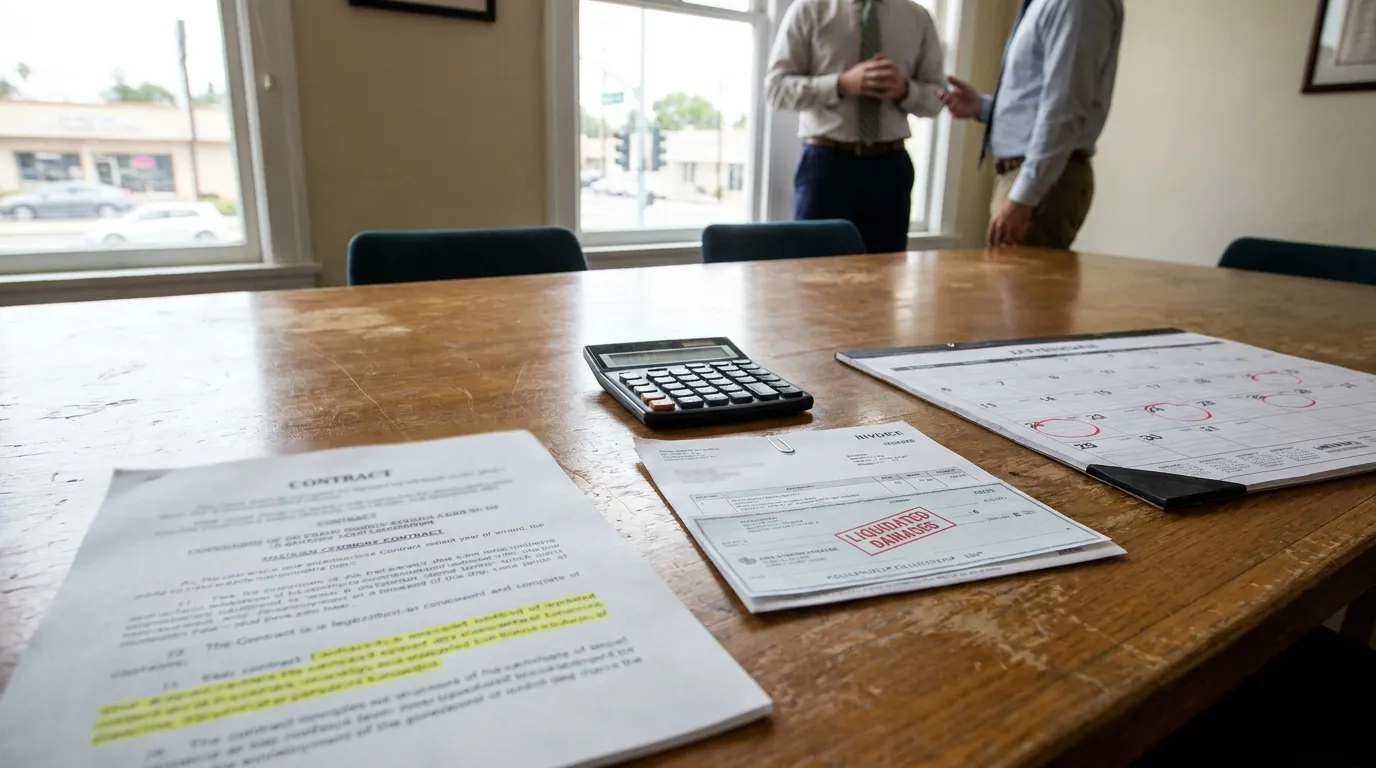
Liquidated damages are a dollar amount, or a formula, that the parties agree on in advance as the payment owed if one side breaches. They are meant to compensate the other party, not punish the breaching party. Under Civil Code § 3294, punitive damages are generally not available for breach of contract alone, although they may be if a separate wrong, such as fraud, is proven.
These clauses are useful because some contract damages are hard to measure after the fact. Examples include a missed launch date, a delayed construction milestone, or a partner who leaks confidential information. A well-drafted clause lets the parties settle that question at signing instead of arguing about it in court years later.
The Liquidated Damages Clause California Standard Under Civil Code 1671
The governing statute is California Civil Code § 1671, found in Title 4.5 of the Civil Code. You can review the California liquidated damages statutes to see how § 1671 relates to nearby sections, including §§ 1675 through 1677. For most business contracts, § 1671(b) sets the default rule: a liquidated damages clause is valid unless the party seeking to void it shows it was unreasonable when the contract was made.
Why the Burden of Proof Matters
In practice, the burden of proof often decides the dispute. Because the clause is presumed valid, the party trying to avoid it has to bring the evidence. Generally, that party must show the agreed amount bore no reasonable relationship to the range of actual damages the parties could have expected when they signed. The California Supreme Court applied this test in Ridgley v. Topa Thrift & Loan Assn. (1998) 17 Cal.4th 970, holding that a clause is an unenforceable penalty when it bears no reasonable relationship to that range of expected damages.
Reasonableness Is Measured at Signing
Courts look back to the date the contract was formed, not to what happened after the breach. Courts may consider:
- The harm the parties could reasonably expect from a breach
- How hard it would have been to prove the actual loss
- The relative bargaining positions of the parties
- Whether the amount reflects a real attempt to estimate damages rather than a penalty meant to force performance
California law used to work very differently. Before the statute was revised effective July 1, 1978, former Civil Code §§ 1670 and 1671 treated these clauses as presumed void, and the party seeking enforcement had to prove that actual damages would be impracticable or extremely difficult to fix. Read older case law with that change in mind.
Exceptions: When the Contract Type Changes the Rules
The presumption of validity does not apply to every agreement. Civil Code § 1671(c) and (d) apply a stricter test to two kinds of contracts when liquidated damages are sought from the consumer or tenant: contracts to buy or rent personal property or services mainly for personal, family, or household use, and residential leases. For those agreements, a clause is void unless fixing actual damages would be impracticable or extremely difficult.
Real estate deals have their own rules. Civil Code §§ 1675 through 1677 govern liquidated damages in contracts to buy certain residential property (generally one to four units the buyer plans to live in). They limit how much of the buyer’s deposit the seller may keep and set specific formatting and initialing requirements.
| Contract Type | Governing Provision | General Standard |
|---|---|---|
| Most commercial contracts | Civ. Code § 1671(b) | Presumed valid; challenger must prove unreasonableness |
| Certain personal/household and residential lease contracts | Civ. Code § 1671(c), (d) | Void unless damages are impracticable or extremely difficult to fix |
| Sales of certain residential real property | Civ. Code §§ 1675, 1677 | Separate statutory requirements apply |
Common Mistakes That Put Liquidated Damages Clauses at Risk
Even in a business setting, some clauses fail because of how they were written or used. A common problem is an amount that looks like a penalty, such as a flat sum far larger than any realistic loss, or a fixed charge that applies the same way to a minor breach and a major one.
Weak Records at Signing
Many clauses become easy to attack because nobody wrote down how the number was calculated. Parties should keep a record of the reasoning behind the amount, such as projected lost revenue, staffing costs, or delay-related expenses. That record can help show the clause is enforceable if challenged.
💡 Pro Tip: When negotiating a new agreement, consider adding a short statement that the parties agree actual damages would be hard to determine and that the stated amount is a reasonable estimate. This does not guarantee enforcement, but it can help show the parties’ intent.
Mixing Liquidated Damages With Other Remedies
Problems can also arise when a contract doesn’t say whether liquidated damages are the only remedy. When a valid clause covers a particular breach, courts generally treat the agreed amount as the measure of damages for that breach. Unclear wording may invite a fight over whether the other party can also seek actual damages, specific performance, or other relief.
Weighing the Costs Before You Sue
Before pursuing or defending a claim under a liquidated damages clause, ask whether the fight makes financial sense. A clear, presumptively valid amount can make damages easier to prove and give you real leverage in settlement talks.
Attorney’s fees clauses can change the math. If the contract lets one or both parties recover reasonable attorney’s fees, California Civil Code § 1717 generally makes that right apply to both sides, so whichever party wins may recover fees. That can make a modest claim worth pursuing, and it raises the stakes for a party deciding whether to resist a valid claim.
Lawsuits are unpredictable, and no one can promise a fixed timeline or cost. Some disputes resolve within days of a well-supported demand letter. Others take years. Our firm approaches these disputes the way a strong chess player approaches a game. Most master-level games end when one side resigns, not with checkmate. The goal is a clear path to a strong settlement, while staying fully ready for trial if needed. For a broader look, read our guide on business contract disputes in California.
Practical Steps When a Liquidated Damages Clause Is in Play
Whether you are enforcing a clause or responding to a demand under one, start by saving the record. Gather the signed contract, drafts, negotiation emails, and any documents showing how the parties arrived at the amount. Review any required notice of breach carefully, because notice terms can affect your remedies.
- Confirm the contract type and whether § 1671(b) or a different provision applies
- Look for an attorney’s fees clause and any mediation or arbitration requirement
- Compare the agreed amount with a realistic estimate of harm
💡 Pro Tip: Check the dispute resolution section before taking action. Many business contracts require mediation or arbitration first, and skipping that step can affect your ability to recover attorney’s fees.
An experienced liquidated damages clause California lawyer can help you judge the strength of the clause and the risks on both sides. The firm’s liquidated damages clause California lawyer team works with business owners on contract drafting, breach of contract claims, and negotiated settlements. For another overview of the statute, this guide to Civil Code 1671 summarizes the general rules.
Frequently Asked Questions
1. Is a liquidated damages clause automatically enforceable in California?
No. Under Civil Code § 1671(b), most business clauses are presumed valid, but a court may refuse to enforce one if the challenging party proves it was unreasonable when the contract was made. Exceptions under § 1671(c) and (d) and §§ 1675 through 1677 may also apply.
2. Who has the burden of proof in a challenge?
In a typical business contract, the party seeking to void the clause carries the burden, and generally must show the amount had no reasonable relationship to the range of damages the parties could have expected.
3. What is the difference between liquidated damages and a penalty?
Liquidated damages are a reasonable advance estimate of loss meant to compensate the other party. A penalty is meant to punish a breach or force performance, and California courts generally will not enforce penalties in contract cases.
4. Can I still sue for actual damages if the contract has a liquidated damages clause?
It depends on the wording. When a valid clause covers the breach, the agreed amount is generally the measure of damages for that breach. Some clauses make liquidated damages the only remedy, while others keep other remedies available.
5. Does it matter how the amount was calculated?
Yes, a great deal. Records made at signing that show how the parties estimated damages can help the clause hold up if challenged.
Protecting the Value of Your Agreement
Under California contract law, a liquidated damages clause in a business contract generally starts out presumed valid. Still, contract type, drafting quality, records, and how the amount compares to the expected harm can all affect whether the clause holds up. Every dispute turns on its own facts, so a careful review is worth doing before you act.
If a liquidated damages clause is at the center of your business dispute, a clear plan can make a big difference. Lurie & Associates helps California business owners and investors weigh their options and pursue strong outcomes. Call (310) 478-7788 or contact us now to schedule a consultation about your contract.
Disclaimer: This content is for informational purposes only and is not legal advice. Every case is unique, and results may vary. Consult an attorney about your specific circumstances.